Field to Table: Cabbage recipes from Plant's Chef Jason Sellers
Field to Table: Cabbage recipes from Plant's Chef Jason Sellers: Inventive, delicious meals made with a WNC staple

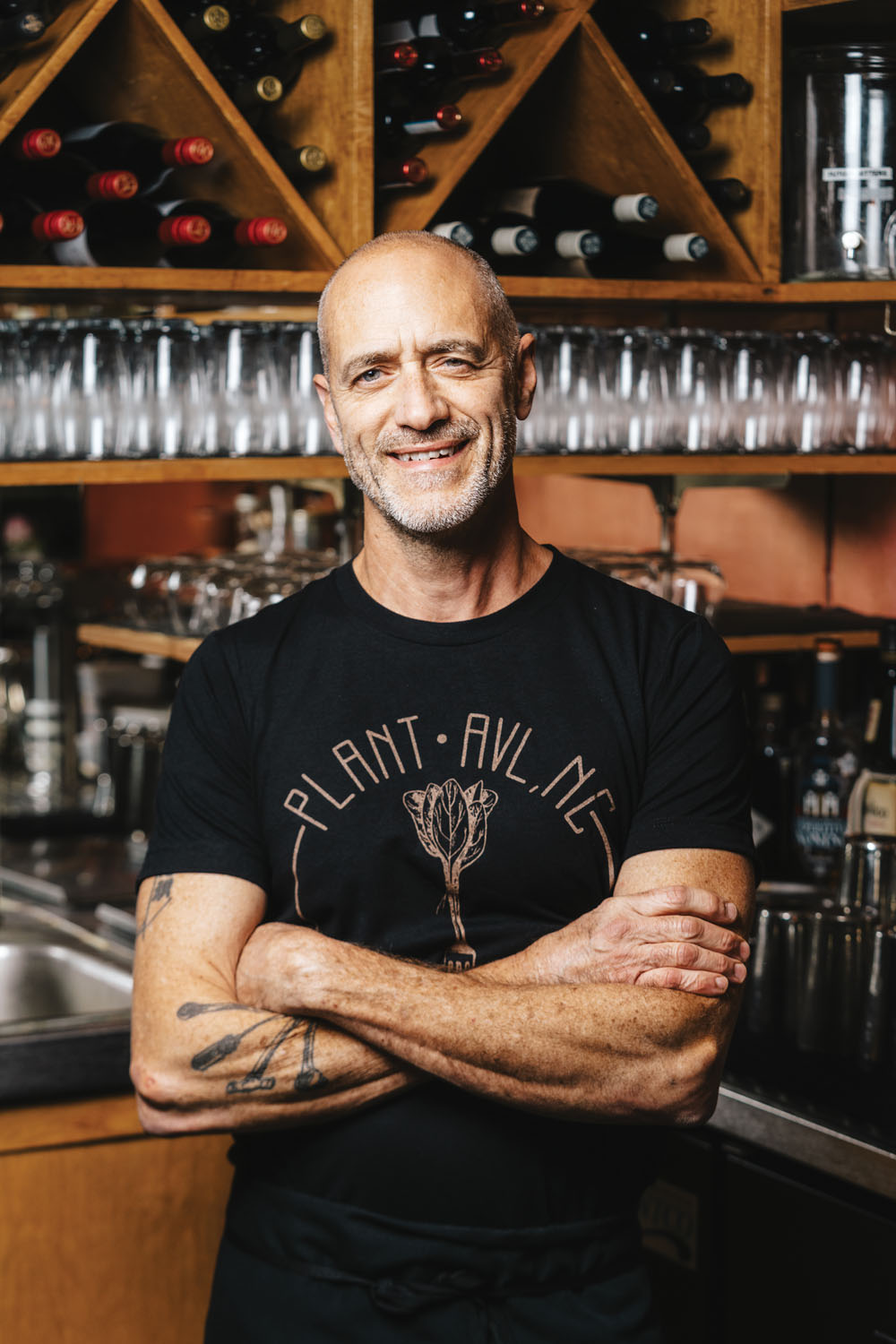
BEHIND THE PLATE Jason Sellers (above), along with Leslie Armstrong and Alan Berger, opened Plant in 2011. Sellers’s recipes are vegan and mostly organic, local, and gluten-free.
Whether as a latch-key kid sprucing up a can of tomato soup for his friends in grade school, dishing out pizzas in college, or crafting elegant yet comforting casual fine dining fare at Plant—his tiny 13-table restaurant on the outskirts of downtown Asheville—Jason Sellers has always seen cooking as a process of transformation.
Beginning with his first gig as a dishwasher at an Italian restaurant in Cary, he was hooked by the industry. Having grown up in a big Italian family where food was a major priority, the passion of feeding the folks you love had been instilled in him, but the camaraderie and energy of a restaurant kitchen seemed to match his own personal drive. So much so that despite garnering multiple degrees and a masters in English, when Sellers and his wife moved to New York City in the late ’90s, he left his work in academia to attend culinary school at the Natural Gourmet Institute for Health and Culinary Arts.
“There’s something that happens over a plate of food that just improves people’s relationships with each other,” says Sellers. “I basically did anything I could do to stay in the industry, but at the same time, I was vegan, so I just didn’t fit into every restaurant scenario. So while respecting and trying to associate with the leaders in the field, I also had to rogue it a little bit.”
While in New York, he cooked at Candle 79, a legendary upscale vegan fine dining eatery that catered to the likes of Paul McCartney and Robert Plant for 31 years until it was forced to shutter during the pandemic in 2020. “Working there really made me realize that I can do this,” says Sellers. “So when we came to Asheville I immediately started working at the Laughing Seed.”
Sellers rose to the rank of kitchen manager at the restaurant and remained there for six years. While at the helm he met Alan Berger and Leslie Armstrong who helped him open Plant in 2011. “They were great business people and they were ethically vegan and wanted to open a restaurant, but they had no idea how to run one, so it made for a great partnership,” observes Sellers. On the heels of the Great Recession, Plant’s remarkably accessible casual-fine-dining model proved to be perfect timing. “I knew what I wanted when we opened; a place that served surprisingly nice casual food.”
“Surprisingly nice” being an understatement. For its first several years, Plant maintained a virtually-unheard-of perfect five-star score on Trip Advisor, and Seller’s innovative and thoughtful approach to cuisine garnered him a James Beard Best Chef Southeast nomination in 2024.
“We make everything from scratch here, the only thing we buy-in is tofu,” He says. Which means that if your dish has cheese, that plant-based cheese was made in house. That also goes for the mayonnaise in every sauce, the ice cream with your dessert, and once even the Coca-Cola imitation syrup in a rum and Coke. “We are constantly breaking down and transforming local produce.”
It’s safe to say that most eaters as well as home cooks have come to view cabbage as a rather pedestrian ingredient. But Sellers argues that it doesn’t have to be. “What’s our favorite cabbage dish; the one that gets consumed the most?” He asks, “It’s probably kimchi, right? Well that’s the biggest transformation you can possibly give a cabbage!”
“Just because it is a peasant food that has been around forever doesn’t mean it doesn’t deserve its own love,” he says. “People think cabbage is boring because they just throw it in while their sauce is cooking and it wilts. But you’ve got to give it some attention, you’ve got to give it a process and transform it a little bit, put some color on it, and then finish it. That way it will take all the acid, sugar, and fat that you want to throw at it, so inherently it is going to taste better.”
Recipes courtesy of Plant’s Jason Sellers
Braised Savoy Cabbage with Chile and Garlic
(yields 2 servings)
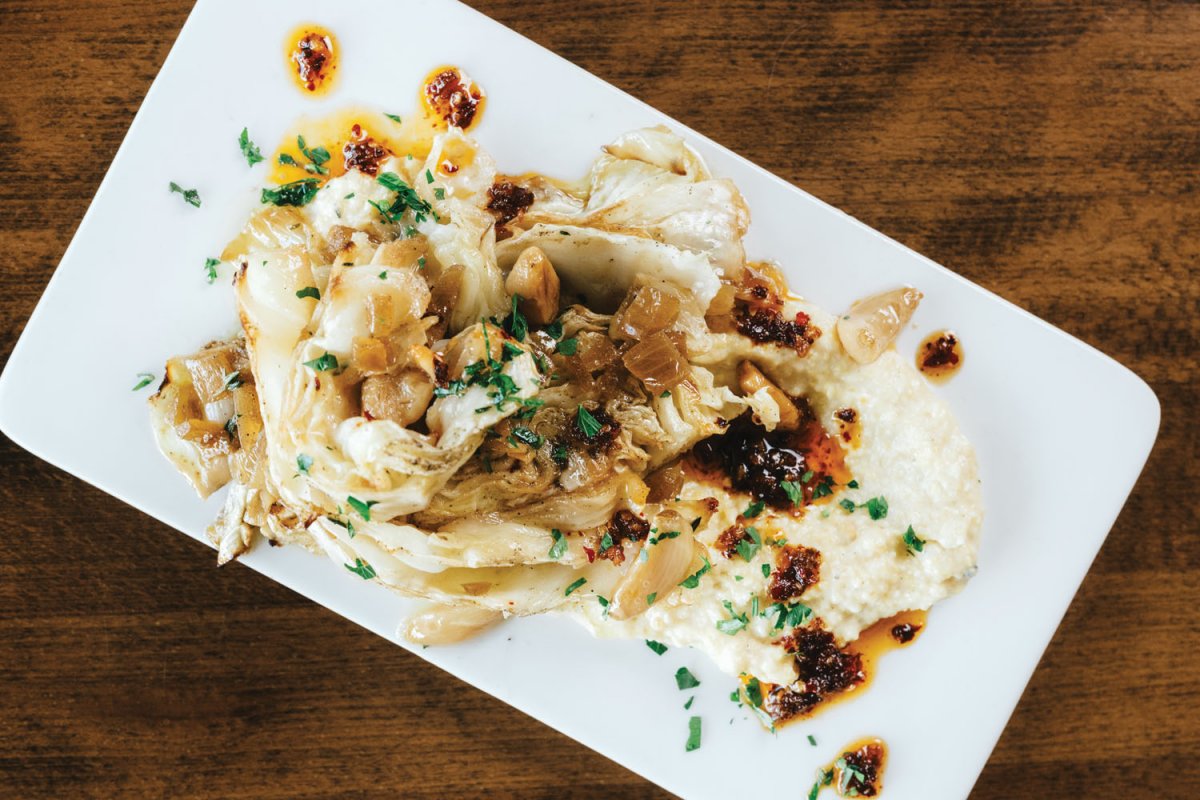
Braised Savoy Cabbage with Chile and Garlic The sweetness and airy texture of savoy cabbage is accentuated by the warmth and sweetness of roasted garlic. Roasted garlic can be made ahead of time by covering whole garlic cloves in your favorite neutral oil and baking, uncovered, until medium golden-brown. If you are unable to make chile craq'ins for garnish, store-bought chile oil works as well. Served here over polenta.
- 1/2 small head savoy cabbage, washed, cut
- into two, with a few outer leaves removed
- 2 tbs. olive oil
- 1/4 cup dry white wine
- 1/2 cup vegetable stock
- 1 tsp. prepared brown mustard
- Salt and pepper, to taste
- Garlic cloves, roasted, to taste
Preheat oven to 350°F. Heat oil in a saute pan over medium heat until it shimmers. Add the cabbage, flat side down, and press it into the pan. Cook for a few minutes without disturbing the cabbage. Once a medium brown color is achieved, flip the cabbage over, and slowly add the wine. Cook for 30 seconds, then add the stock and mustard, and season with plenty of salt and fresh cracked pepper to taste.
Spoon the liquid over the cabbage, add roasted garlic cloves to taste, then move the pan to the oven. Cook for 15 minutes until the cabbage softens and the liquid is reduced. Serve and top with optional chile craq’ins.
For the Chile Craq’ins (yields approximately 1 quart)
- 4 shallots, roughly chopped small
- 1/2 cup garlic cloves, roughly chopped small
- 1 ¾ cup good-quality neutral oil
- 1/2 cup roasted, unsalted peanuts
- 2 oz. by weight d’arbol chile
- 1 oz. guajillo chile
- 1 tbs. tamari
- 1 tbs. sugar
- 1/2 tsp. ground cumin
- 1/4 tsp. black pepper
- 1/4 cup Calabrian chile in oil
After chopping the shallot and garlic, heat the oil over medium heat in a medium size saucepot. Once the oil is hot and shimmering, add the shallot and garlic and fry until dark and crispy, about 10 minutes.
While the shallots and garlic are frying, pulse the peanuts in a food processor until cracked and coarse, then move them to a mixing bowl. Destem the chiles, and pulse them in food processor until their shape and texture match that of the peanuts. Add the chiles to the mixing bowl.
Add the tamari, sugar, spices, and chile oil to the mixing bowl. Once the shallot and garlic mixture is deep brown and crispy, carefully strain the hot mixture of oil, peanuts, and chile through a mesh strainer into the dry ingredients in the mixing bowl, and stir the contents of the bowl.
Spread the shallot and garlic mixture from the strainer onto a sheet pan in a single layer, and allow to cool completely. Once the mixture has cooled, combine it with the other ingredients in the mixing bowl, and stir to make a uniform mixture. Spoon chile craq’ins over the cabbage.
Grilled Purple Cabbage Wedge with Cultured Chipotle Ranch
(yields 2 servings)
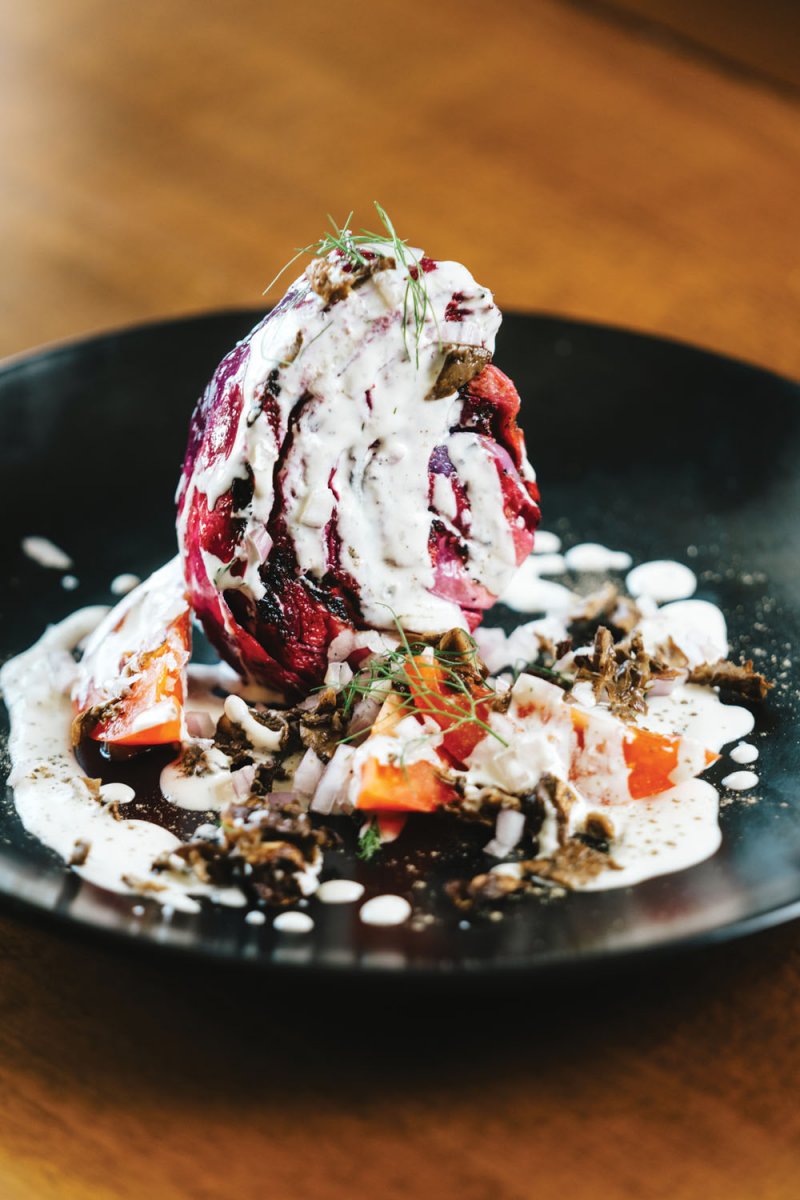
Grilled Purple Cabbage Wedge with Cultured Chipotle Ranch Here, a slightly acidic marinade and the bold flavor of the grill are matched with a creamy, nutty ranch-style dressing for a more memorable wedge. Making a sprouted probiotic liquid, here referred to as rejuvelac, is ideal for culturing other foods and fortifying your healthy pantry.
- 1/2 small head purple cabbage, cut into two
- wedges, with most of the core removed
- 2 tbs. olive oil
- 3 tbs. fresh lime juice
- 1/2 tsp. adobo seasoning
- Generous amount of salt and pepper, to taste
- Chopped fresh parsley and oregano, to taste
- 1 small-medium sprig fresh dill, fronds only, lightly chopped
- Tomato, chopped, to taste
- Roasted corn, to taste
- Mushrooms, to taste
For the Cultured Chipotle Ranch Dressing
- 1 cup whole raw cashews
- 1 cup water
- 2 tbs + 1 tsp. lemon juice
- 2 tbs. olive oil
- 1/2 tsp. fresh chopped garlic
- 1/2 tsp. nutritional yeast
- 1/4 tsp. garlic powder
- 1/4 tsp. onion powder
- 1/2 tsp. homemade rejuvelac or yogurt
- 1/2 heaping tsp. salt
- Pinch of black pepper
- 1 small chipotle pepper in adobo
Preheat a charcoal or radiant gas grill for medium-high heat grilling. In a small bowl, mix the oil, lime juice, and adobo seasoning until uniform.
Add the cabbage, and massage the mixture into all three sides of the wedge. Let rest to marinate this way for at least one hour.
While marinating the cabbage, combine the dessing ingredients in a capable blender, and blend until smooth. Pour into a storage or service container, add the dill, and stir to combine.
After the cabbage has marinated, grill the wedges, making cross-hatch marks on the two flat sides first, about 2 or 3 minutes each side. Allow marinade to drip from the cabbage and create a small amount of smoke. Grill the round side of the wedge for 1 minute. The cabbage should have an iridescent blue-purple hue to it, and it should be softened but retain crunch.
Remove the cabbage from the heat, and trim the remaining bulk of the white core. Plate the wedge upright, drizzle with dressing, garnish with chopped parsley and oregano, and finish with optional toppings.
Seared Napa Cabbage with Mustard Seed and Pickled Carrot
(yields 2 servings)
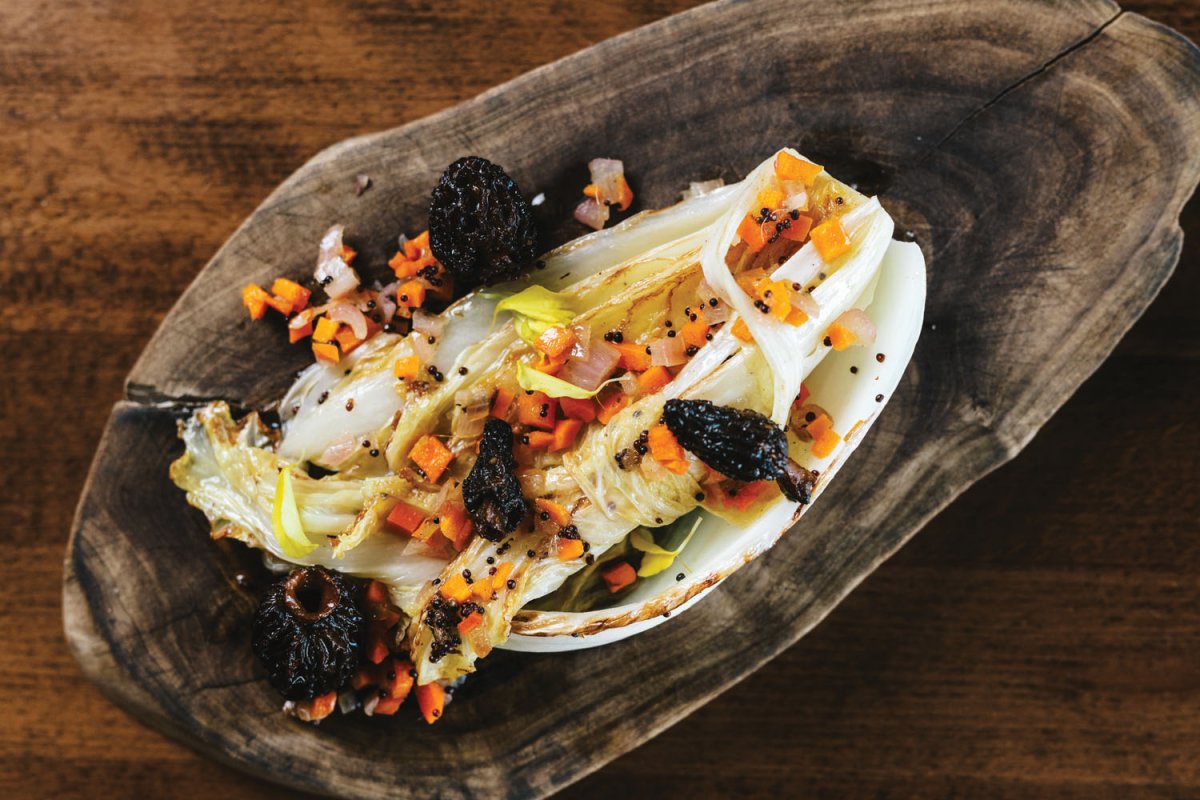
Seared Napa Cabbage with Mustard Seed and Pickled Carrot Napa cooks quickly, so a quick sear with assertive mustard seed, a little ginger, and the brightness of pickled sweet carrot results in a dish that is half cooked, half raw . . . the state in which napa is best enjoyed. Prepare the carrots ahead of time with either method.
- 1/2 medium head napa cabbage, cut in half, most of the core removed, but some left in tact
- 3 tbs. neutral oil or plant-based butter
- 1 shallot, small dice
- 1-2 tsp. brown mustard seeds
- 2 tsp. fresh ginger, grated
- 1-2 tbs. good-quality tamari or soy sauce
- 1-2 tbs. rice vinegar
- 1-2 tbs. pickled carrot
- 1 tsp. toasted sesame oil, or more to taste
- Morels, to garnish
In a cast-iron pan or thin iron crepe pan, heat the oil or butter over medium-high heat. Once the oil or butter is hot, place the cabbage halves flat side down. Cook for 1 minute, then add the shallot and mustard seeds to the pan, and place another pan atop the cabbage to weigh it down slightly.
Cook for another minute, and once the cooked side takes on a light brown color and the mustard seeds have turned grey, flip the cabbage over, add the ginger, and cook for 10 seconds. Then add tamari or soy sauce, vinegar, and carrot, and immediately turn cabbage with a pair of thongs or large fork so that it becomes covered in the pan mixture.
Remove from the heat, and drizzle with sesame oil. Trim the remaining core, and serve warm, dressed with all the contents of the pan.
For the Pickled Carrots
For a darker but probiotic-rich carrot, ferment clean small-diced carrots by covering them in a good-quality salt brine made by combining 1 heaping tablespoon salt and 1 cup of filtered water. Store the mixture at room temperature, covered but open to some air, for at least a week. Carrots should be softened but firm, and possess a salty but sweet taste indicative of lacto-fermentation.
For lighter, brighter quick-pickle’ish carrots, mix clean small-diced carrots with salt, a splash of your favorite vinegar, and a splash of lemon juice.
Plant
165 Merrimon Ave., Asheville
Wednesday, Thursday, & Sunday 5 p.m.-9 p.m., Friday & Saturday 5 p.m.-10 p.m., closed Monday & Tuesday
(828) 258-7500
www.plantisfood.com