Cultural Twist at Little Chango
Cultural Twist at Little Chango: Puerto Rican-born chef Iris Rodriguez spices up her childhood dishes with wider Latin American influences

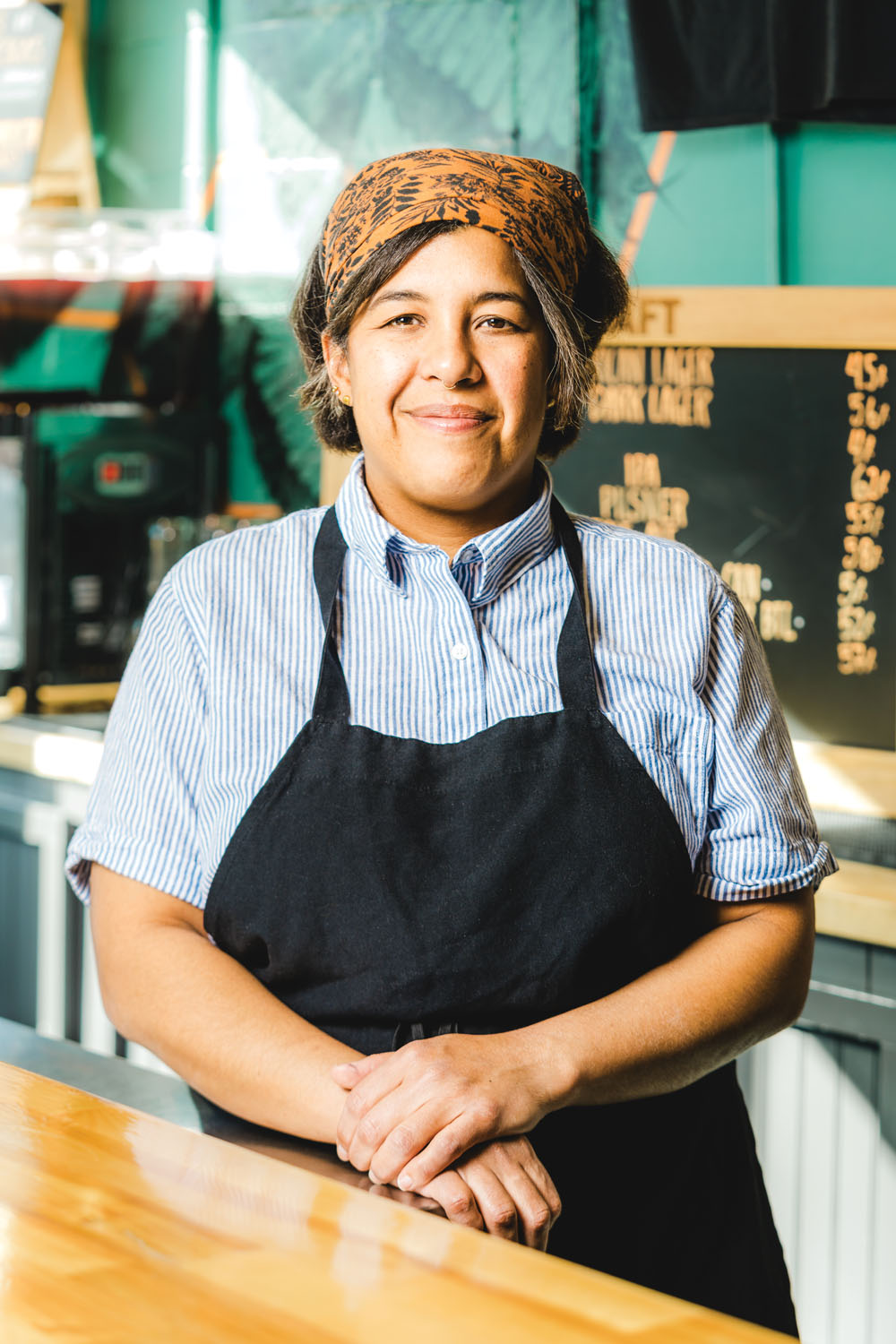
Top Chef: Iris Rodriguez opened Little Chango in 2021; four years later, the Michelin Guide gave her petite South Slope eatery a Bib Gourmand title, which honors restaurants serving quality food at a great value.
It’s tempting to say that Little Chango is having a moment, but in reality, the restaurant’s been making waves since it opened in 2021. Named for the small black grackle common to Puerto Rico that’s known for its ravenous appetite and gregarious personality, the casual and quirky seven-seat restaurant recently earned the Michelin Guide’s prestigious Bib Gourmand Award.
“Never in a million years did I think we’d get that—in a restaurant, that really is the dream,” says Chef Iris Rodriguez, who founded this lively little Hispanic kitchen with her husband, Jose Busto. “When we opened this place, we said that we wanted a place with good food that was affordable for everybody, and that’s exactly what the Bib Gourmand recognizes. So it tells me we’re going in the right direction.”
The award is a particular mark of pride for Rodriguez, because her first career wasn’t in the food and beverage industry. She studied finance and worked as a banker before leaving that world altogether to attend culinary school at AB Tech when they moved to Asheville. “When I started in banking, I loved it. It was about building relationships and being a point of contact for people and providing them anything they needed. But it turned into this predatory thing,” she says. “Being in a kitchen just suits my personality way better.”
Rodriguez worked at Cúrate for five years, bouncing between their flagship restaurant and Nightbell and eventually working her way to sous chef at Button’s Bagels before it was shuttered by the pandemic. She also managed Hole Doughnuts for a stint, but her goal was to do something of her own. Having grown up in Puerto Rico, she wanted to cook food that reflected the Puerto Rican and Cuban ancestries of her family. When a 600-square-foot building in the heart of the South Slope became available, she and her husband jumped at the opportunity.
“I didn’t want to specifically tie myself to Puerto Rican cuisine. I wanted to tie in my culinary background and do a mix of things. That’s how we decided to do arepas,” she notes. “Arepas are not traditional in Puerto Rico—we have them, of course, but they were brought in from Colombia and Venezuela. They’re not part of our culinary identity.” Little Chango’s riff on arepas blends her heritage by topping them with Cuban and Puerto Rican staples. The Ropa Vieja Arepa serves up shredded flank steak over a black bean mash with plantains and queso fresco, and the Pernil comes bearing slow-cooked pork shoulder with pickled cabbage and onions topped by a chili de arbol sauce.
“In Hispanic culture, we grow up in the kitchen and around the dinner table. Food is an event for us,” says Rodriguez. “You are expected, in a way, to carry on those traditions, so you have to learn family recipes from the time you’re little. I think it’s embedded in Hispanic people to know how to cook and love it.”
Recipes courtesy of Iris Rodriguez,
Little Chango Chicken Chile Verde Arepa with Aji Colombiano
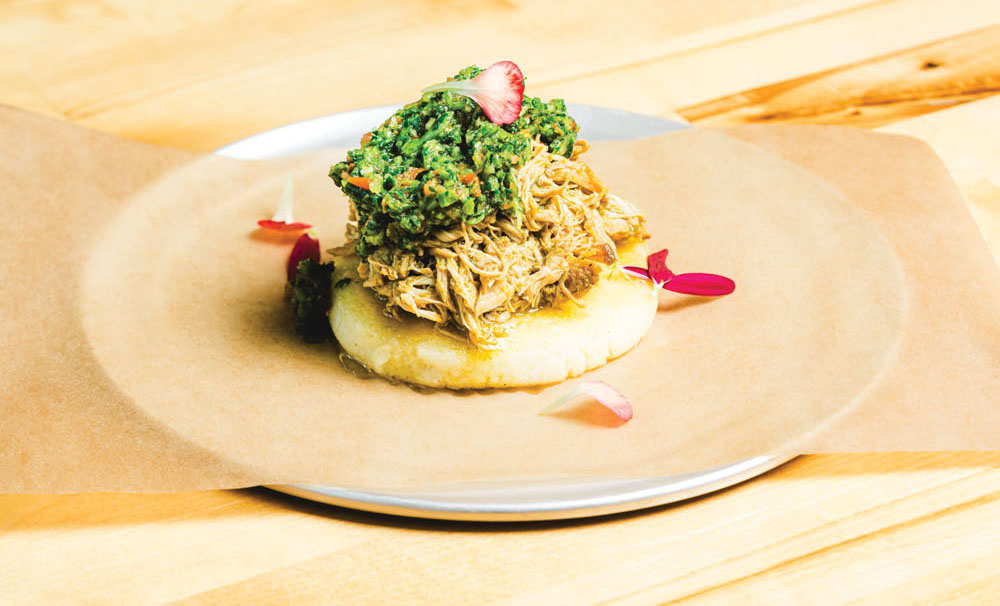
Fresh Fusion: The Puerto Rican chef stews chicken, tomatillos, poblanos, shallots, and garlic into a thick and flavorful chile verde then mounds that atop an arepa along with a salsa made from vinegar, lime, cilantro, and serrano peppers.
Chicken Chile Verde (Yields 8 to 10 servings)
- 8 cups water
- 1/3 cup Kosher salt
- 1 Tbsp. sugar
- 1 tsp. black pepper
- 1 tsp. coriander seeds
- 3 garlic cloves
- 1 lemon, halved
- 2 lbs. chicken breast
- 8-10 tomatillos, cut in half
- 1 yellow onion, cut into 4 wedges
- 3 poblano peppers, diced large
- 4 garlic cloves
- 1/2 bunch cilantro (including stems)
Combine the first 7 ingredients in a large saucepan over medium heat. Cook, stirring often, until the salt and sugar dissolve. Cool the brine completely (below 41°F).
Place the chicken in the brine for 60 to 90 minutes. Meanwhile, preheat an oven to 400°F.
Arrange the tomatillos, yellow onion, poblano peppers, and garlic cloves on a large sheet tray. Roast for 20 minutes. Remove the roasted vegetables from the oven, and carefully place into a blender. Add the cilantro, and blend until the ingredients are fully incorporated.
Remove the chicken from the brine. In a medium saucepan over medium heat, combine the chicken and vegetable mixture, then cover. Once simmering, reduce the temperature to low. Cook for about 2 hours, or until the chicken pulls apart easily and the sauce has thickened. (If the chicken finishes cooking before the sauce has thickened, uncover the saucepan and let the sauce continue reducing for 15 to 20 minutes.)
Aji Colombiano (Yields 2 cups)
- 2 medium Roma tomatoes, diced small
- 1 shallot, diced small
- (recipe continues on page 102)
- (recipe continued from page 101)
- 3 garlic cloves, diced small
- 4 green onions, thinly sliced
- 1 bunch cilantro, stems removed
- 1 serrano pepper, diced small
- Juice of 1 lime
- 1 Tbsp. white vinegar
- 1/4 cup water
- Salt and pepper, to taste
Place the tomatoes, shallot, garlic, green onions, cilantro leaves, and serrano pepper into a food processor; pulse until everything is minced. Place the mixture into a medium bowl, then add the lime juice, vinegar, and water. Stir until combined. Season with salt and pepper.
Masa Arepa (Yields 8 to 10 arepas)
- 2 ½ cups lukewarm water
- 1 Tbsp. blended oil
- 1 tsp. Kosher salt
- 2 cups precooked white cornmeal
- (Rodriguez uses the brand P.A.N.)
- Canola oil, for greasing the griddle
In a stainless steel bowl, combine the water, oil, and salt. Slowly whisk in the cornmeal until the mixture comes together. Using your hands, knead the mixture until smooth and homogeneous.
Divide the dough into 8 to 10 equal portions. With your hands, form each portion into a small ball then flatten into a thin disk roughly 5 inches in diameter.
Coat a griddle with canola oil. Working in batches, cook the arepas over medium heat for about 5 minutes per side. Remove to an oven-safe plate. Keep warm until ready to serve.
To serve:
Place one arepa on each plate, top with 1/2 cup of Chicken Chile Verde and about 2 tablespoons of Aji Colombiano. This dish is also delicious served with avocado and queso fresco.
Coconut Cardamom Flan
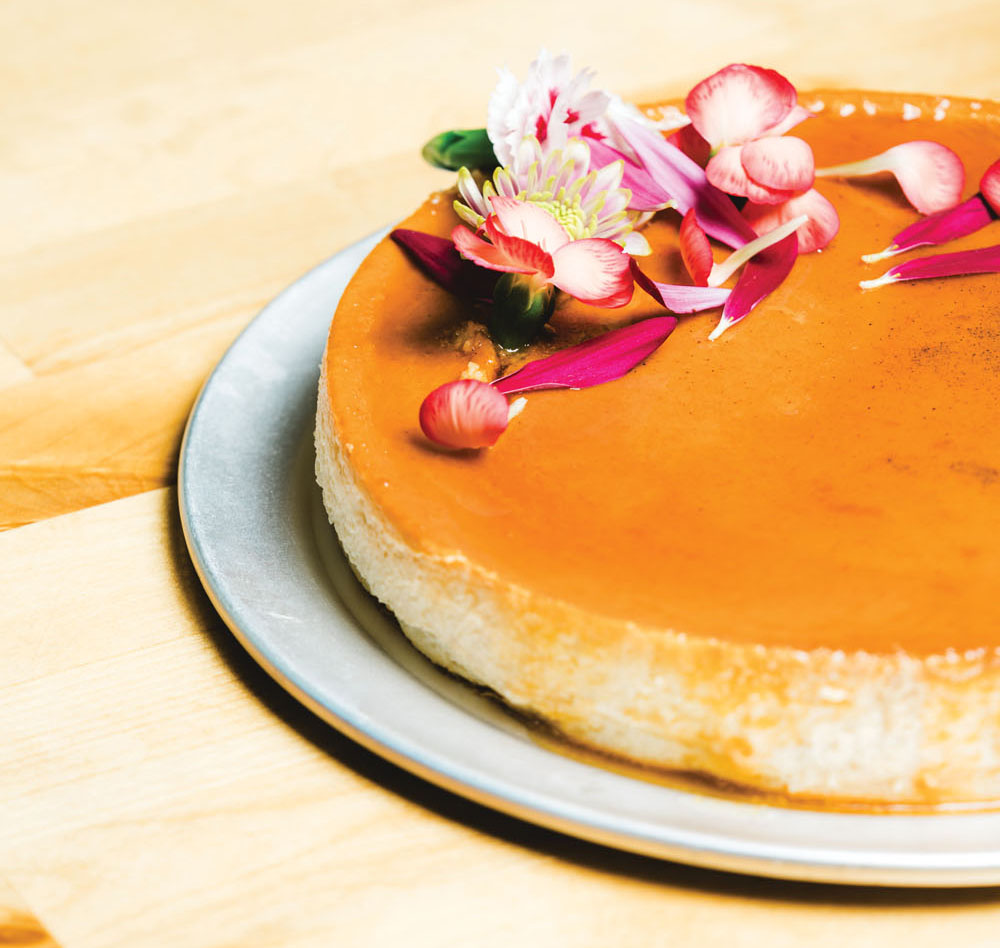
Sweet & Simple: For spring, Rodriguez’s twist on flan incorporates coconut milk and cardamom to lighten the flavors. “The process for flan in Puerto Rico is a little different from the Spanish way,” she says. “We don’t make a custard to start with—we just blend it all together. It’s way easier!”
(Serves 8 to 10)
- 2 cups granulated sugar
- 3 large eggs
- 14 oz. can sweetened condensed milk
- 13.5 oz. can unsweetened coconut milk
- 8 oz. cream cheese
- 1 tsp. vanilla extract
- 1 tsp. green cardamom powder
Preheat an oven to 350°F. In a small saucepan over medium heat, melt the sugar until it dissolves completely and develops a golden brown color. (If needed, gently stir the caramelized sugar with a wooden spoon.) Remove the caramel from the heat. Pour into the bottom of an ungreased 8- or 9- inch cake pan with 2-inch-high sides, being sure to completely cover the bottom of the cake pan. Set aside, and let cool to room temperature.
Place the eggs, condensed milk, coconut milk, cream cheese, vanilla, and cardamom into a blender. Blend until fully incorporated, about 1 minute. Pour the mixture into the cake pan.
Set the cake pan in a large pan, then add water to the larger pan to reach between halfway and two-thirds up the side of the cake pan. Place the water bath and cake pan in the oven and cook for 50 minutes or until the cake is set around the edges and jiggles slightly in the middle. Remove the cake pan from the oven and water bath, and cool at room temperature for about 20 minutes. Once cool, refrigerate for at least 4 hours or overnight for best results. Invert onto a serving plate.
Inside Scoop
Chef Iris Rodriguez, Little Chango
Favorite arepa topping?
Avocado with a salty, fresh cheese
What to sip with arepas?
Agua fresca or Topo Chico
Coolest thing about Asheville’s restaurants?
“Their collective creativity, support of one another, and great relationships with farmers.”
What’s next?
“For now, trying to make the best food we can and keep Little Chango a welcoming place.”
Little Chango
134 Coxe Ave., Asheville
www.littlechango.com