Buzz Worthy Gardens
Buzz Worthy Gardens: Beckon good bugs by establishing your own pollinator garden with advice from the WNC Nature Center

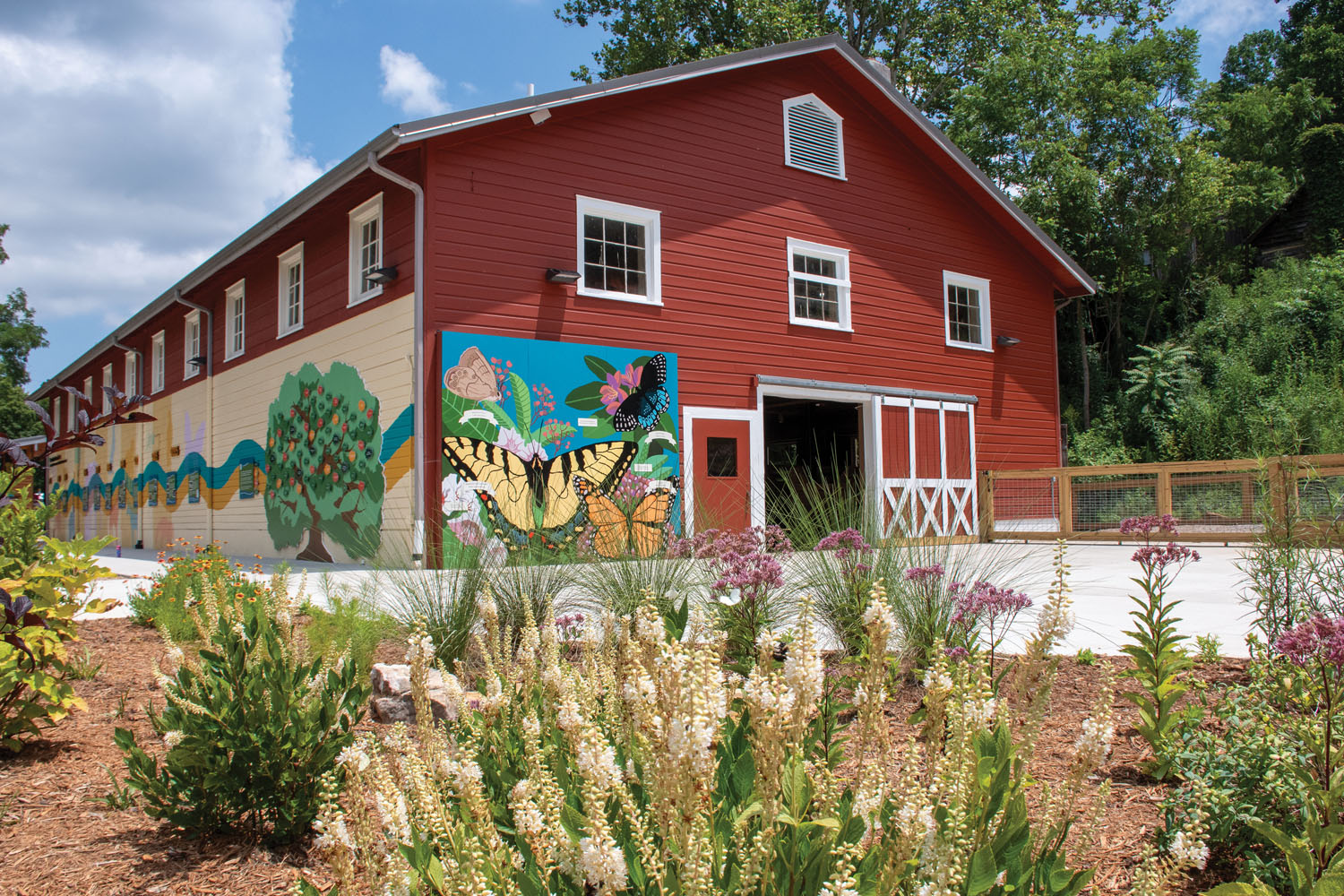


The connection between plants and pollinators fascinates gardener and environmental educator Brenna Tull. “Most flowering plants require a visit by a pollinator to produce seeds, a relationship that formed millions of years ago. Those seeds, and the plants they become, act as food, meaning the plant-pollinator link sustains the world’s food webs,” says the Friends of the WNC Nature Center volunteer coordinator.
North Carolina’s pollinator posse includes bees, moths, butterflies, wasps, ants, beetles, and hummingbirds. Sadly, these populations are declining, primarily due to habitat loss and pesticides. NC State University apiculture experts estimate that Hurricane Helene destroyed as much as 90 percent of the region’s working beehives.
To help give wing to pollinator population numbers, the WNC Nature Center established a pollinator garden last spring as part of its “Gateway to the Southern Appalachians” project. “Habitat gardens like this one provide the resources these insects need to survive year-round,” explains Tull. During the center’s first growing season, an army of monarch butterfly caterpillars completely defoliated the plot’s small patches of butterfly weed (Asclepias tuberosa). “It was a great reminder that, if you plant it, they will come.”
Here, Tull shares tips and advice for getting your own pollinator garden off the ground.
WNC: How should gardeners prep their garden space?
Brenna Tull (BT): Begin with a clean slate by removing weeds and grass. Use cardboard or plastic sheeting to smother vegetation rather than herbicides that may harm pollinators. Soil health is critical, so I recommend getting a soil test kit from your local extension to help guide soil preparation.
WNC: What sorts of plants work best?
BT: Plant diversity helps attract an array of pollinators. Choose native plants that you enjoy and that fit the site’s conditions. Be sure to prioritize a mix of perennials, shrubs, and trees with differing bloom times to provide food sources from March through November.
WNC: What else should a pollinator garden include?
BT: Like people, pollinators need food, water, and shelter. Native plants can cover all of these basic needs. Take the cup plant (Silphium perfoliatum): its curved leaves hold rainwater; its flowers provide nectar and pollen; and hollow stems house overwintering insects. You can also incorporate extra resources, like shallow saucers of fresh water and a brush pile for nesting materials.
WNC: Does a pollinator garden require much maintenance?
BT: Water it daily for a few weeks after planting and during hot, dry spells. Once native plants are established, they shouldn’t need to be watered or fertilized often, if ever. Since these plants evolved here, they’ve adapted to our region. You also don’t need to remove spent flowers, as deadheads provide seeds to feed birds and small mammals and grow new plants. Leave standing dead stems in place to offer shelter for overwintering insects. Fallen leaves house caterpillars and firefly larvae and act as mulch and fertilizer. When you let natural cycles guide your maintenance choices, gardening becomes simpler.
WNC: What about weeding?
BT: Try to identify weeds before removing them. If a plant is native, it’s probably helping wildlife in some way. Ultimately, what counts as a weed is up to you. Most can be kept at bay by removing their flowers before seeds form. Minimizing soil disturbance also avoids turning over new weed seeds.
WNC: What’s the best way for gardeners to handle pests?
BT: In a habitat garden, you want animals to eat the plants and use the space. Caterpillars defoliate plants before transforming into butterflies. Bees swarm holes in the ground to fill nests with “bee bread,” a food mixture for their babies. I generally only consider pests to be non-native, invasive wildlife that threatens native biodiversity. Of course, overpopulated mammals, like deer, can cause problems in new gardens, so use wire fencing until plants get established.
The Bee’s Knees
Tull shares some of her favorite native perennials for pollinator gardens
- Asters (genera Symphyotrichum and Eurybia)
- Blue Mistflower (Conoclinium coelestinum)
- Boneset (Eupatorium perfoliatum, E. serotinum)
- Chokeberry (Aronia arbutifolia, A. melanocarpa)
- Crossvine (Bignonia capreolata)
- Golden Alexanders (Zizia aurea)
- Goldenrod (genus Solidago)
- Joe-Pye Weed (Eutrochium fistulosum, E. maculatum)
- Milkweed (genus Asclepias)
- Mountain Mint (genus Pycnanthemum)
- Passionflower (Passiflora incarnata, P. lutea)
- Ragwort (genus Packera)
- Serviceberry (Amelanchier arborea, A. canadensis)
- White Oak (Quercus alba)
- Wild Goldenglow (Rudbeckia laciniata)