Hickory Nut Gorge Green Salamander
Hickory Nut Gorge Green Salamander: Aneides caryaensis

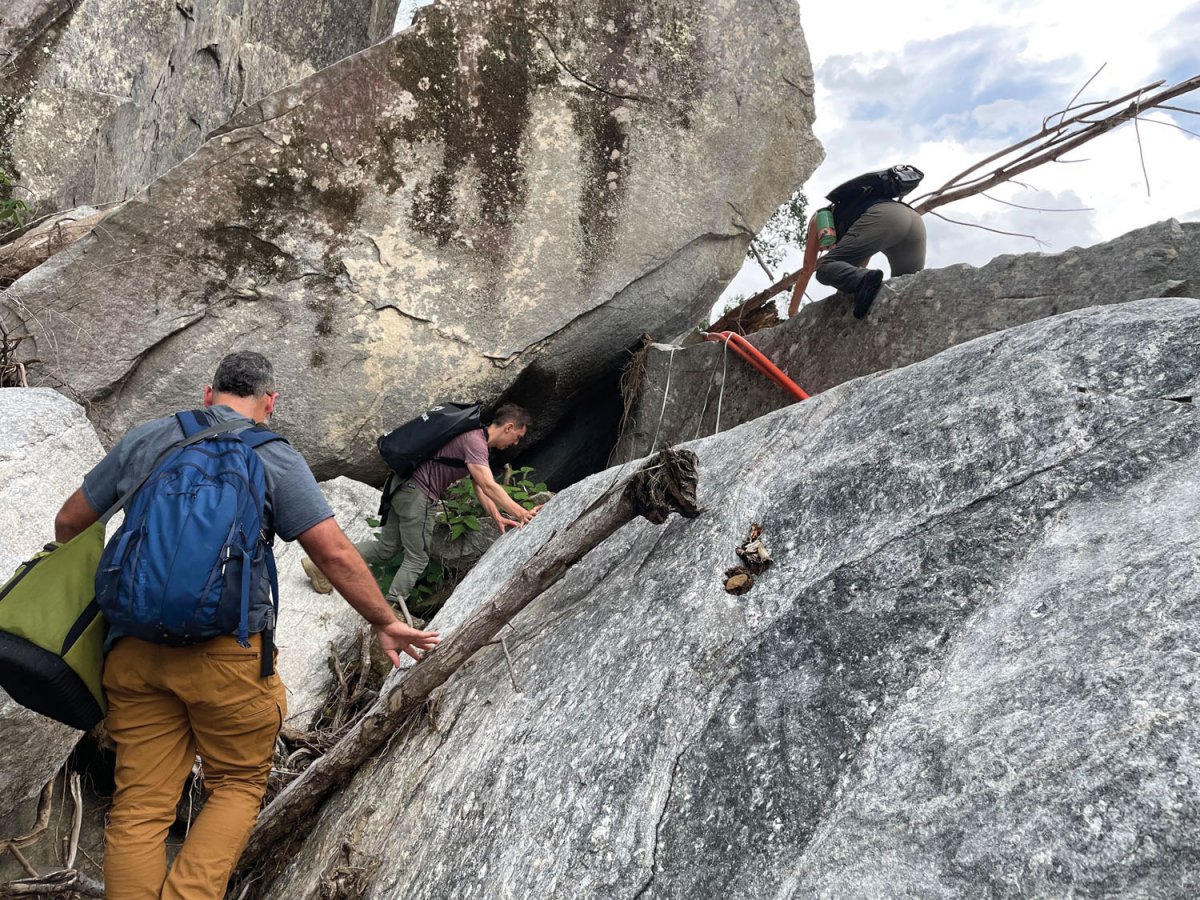
The only place in the world where this critically endangered species can be found is a 14-square-mile area of Hickory Nut Gorge in NC’s Blue Ridge Mountains. Before Hurricane Helene, the species was already near extinction due to habit loss from tourism and development, with population numbers estimated between 200 and 500 in the wild.
Adhesive toe pads and a dexterous tail make this salamander an adept climber. These arboreal amphibians emerge in early spring to climb nearby trees, where they live during warmer months by eating insects. Females return to rock crevices around July to nest.
Genetic analysis shows “Greens,” as scientists affectionately call them, are 10 to 12 million years old. They weren’t identified as a separate species until 2019. Dr. JJ Apodaca, executive director for Amphibian and Reptile Conservancy (ARC), headed the team that officially documented the Hickory Nut Gorge green salamander.
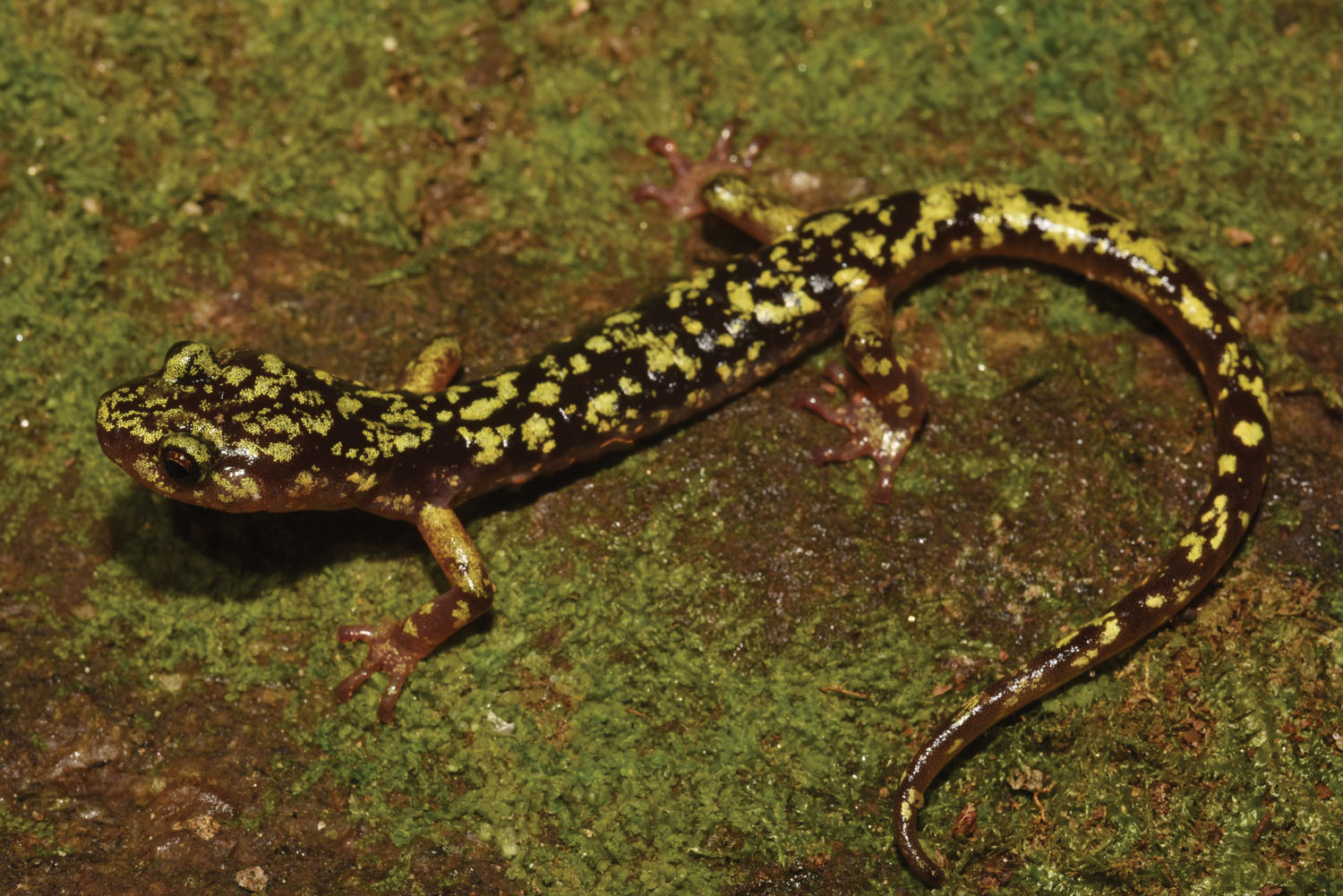
Marbled green-yellow and black skin camouflages the critter against the mossy, rocky outcroppings and crevices of the gorge. This salamander is lungless, breathing instead through its skin. Its lack of lungs also enables it to flatten into small crevices and remain unseen in trees.
Dr. Apodaca has spearheaded efforts to save the Greens. In 2025, the conservation geneticist caught 25 salamanders to establish a captive breeding program at North Carolina Zoo. According to the ARC team, these elusive little salamanders are now gaining weight and thriving.