The Backcountry Beckons - Destinations
The Backcountry Beckons - Destinations
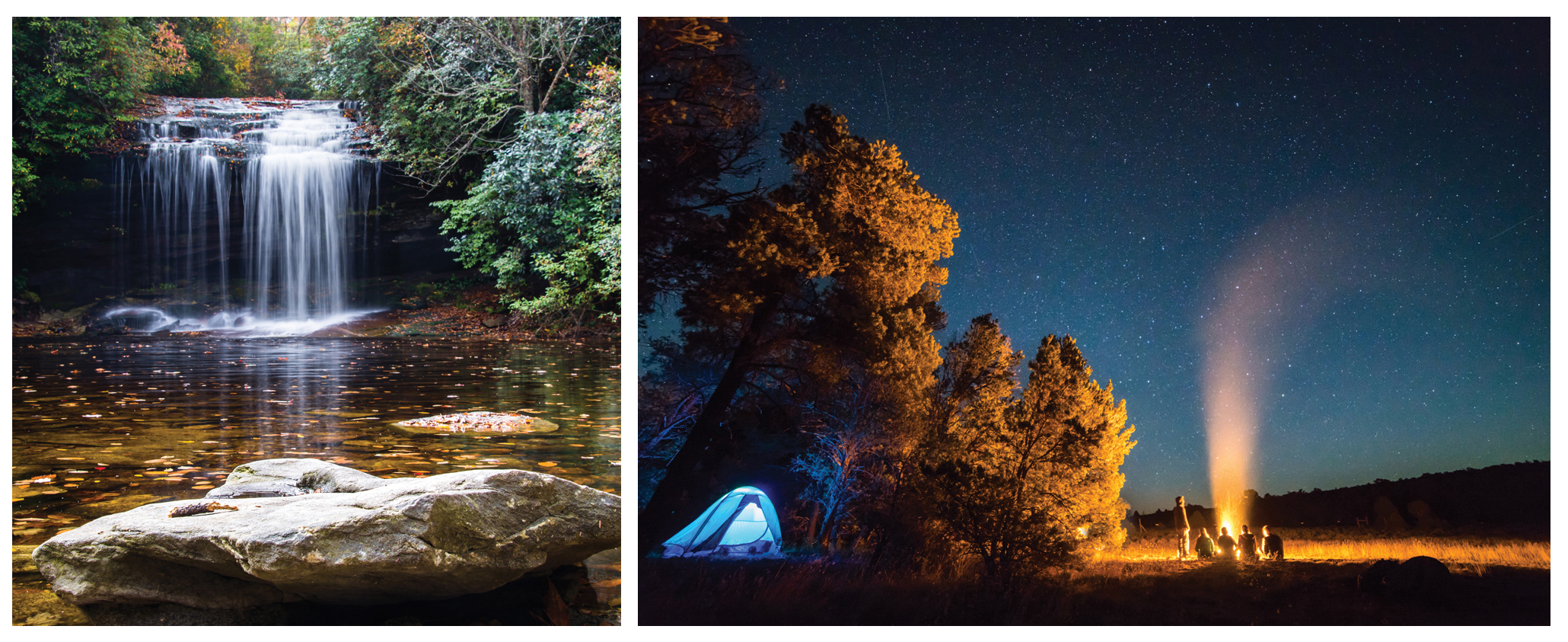
(Left) Panthertown Valley, Schoolhouse Falls; (right) South Mountains State Park.
A lot is up in the air with this summer’s backcountry camping scene. Helene damaged many of the best backpacking areas, which are still being evaluated or prepared for opening. The list below of public parks and forests are a few of the reliable areas open for backcountry camping, though visit their websites for the latest info.
Shining Rock and Middle Prong Wilderness Areas
This 18,000-acre Pisgah National Forest Wilderness Area is primitive, especially with its unmarked trails. Campfires are not allowed, groups may not be larger than ten people at any time, and bicycles are not allowed in the wilderness areas. Bear canisters for food are required. fs.usda.gov/recarea/nfsnc
Panthertown Valley Backcountry Area, Nantahala National Forest
This area is home to an extensive waterfall and forest-filled trail system with plentiful backcountry campsites for base camp or circuit overnight trips. Bear proof food containers are required by USFS (Forest Order 08-11-21-123 / USFS/IGBC approved containers). fs.usda.gov/recarea/nfsnc
South Mountains State Park
Most trails reopened in late spring for summer, with various backcountry campsites available—except Shinny Creek and Upper Falls campsites. ncparks.gov/state-parks/south-mountains-state-park
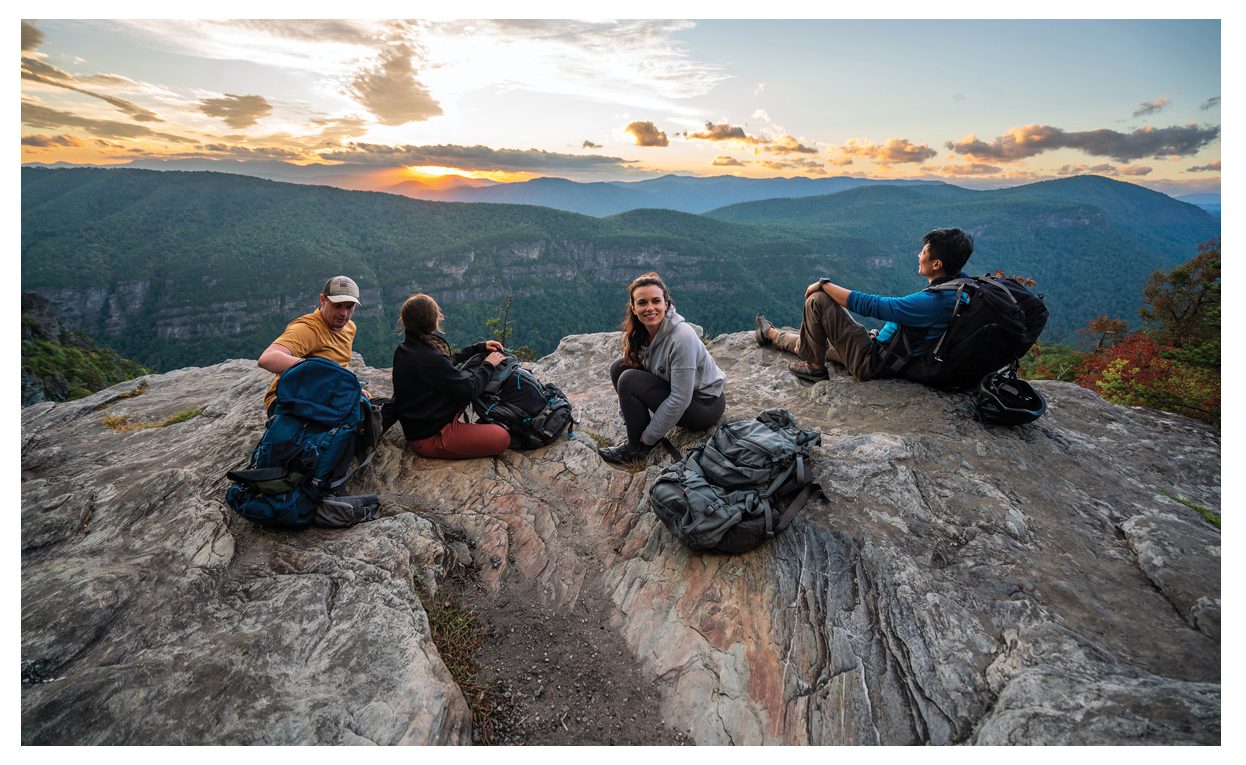
Linville Gorge Wilderness.
Great Smoky Mountains National Park
The GSMNP contains an 80-mile stretch of the Appalachian Trail and hundreds of miles of backcountry trails in NC/TN. It’s best to avoid camping on the AT due to thru-hiker traffic and camping preferences, but many remote campsites exist on lengthy backpacking trips. Cataloochee and Big Creek were closed in the spring but should be open for summer. Online camping reservations are required (plan summer/fall 2025 trips early), and be sure to read about the park’s new mandatory parking program. nps.gov/grsm/planyourvisit/fees.htm
Doughton Park, Blue Ridge Parkway
Eight sites reside at the formally-designated Basin Creek backcountry camping area on Grassy Gap Road, 1.7 miles from valley trailhead. The campsites are surrounded by a trail network with many day hikes and in-and-out loops for overnighters. nps.gov/blri/planyourvisit/doughton-park.htm
Grandfather Mountain State Park
Only the Profile Trail, Profile Connector, and the parking lot are closed. The east side trails and ridge are open with 12 campsites. ncparks.gov/state-parks/grandfather-mountain-state-park
Elk Knob State Park
The park’s Backcountry Trail contains six designated dispersed group and individual backcountry campsites on the north slope of Elk Knob, about 1-2 miles from the parking lot. No campfires, gas stoves only. ncparks.gov/state-parks/elk-knob-state-park
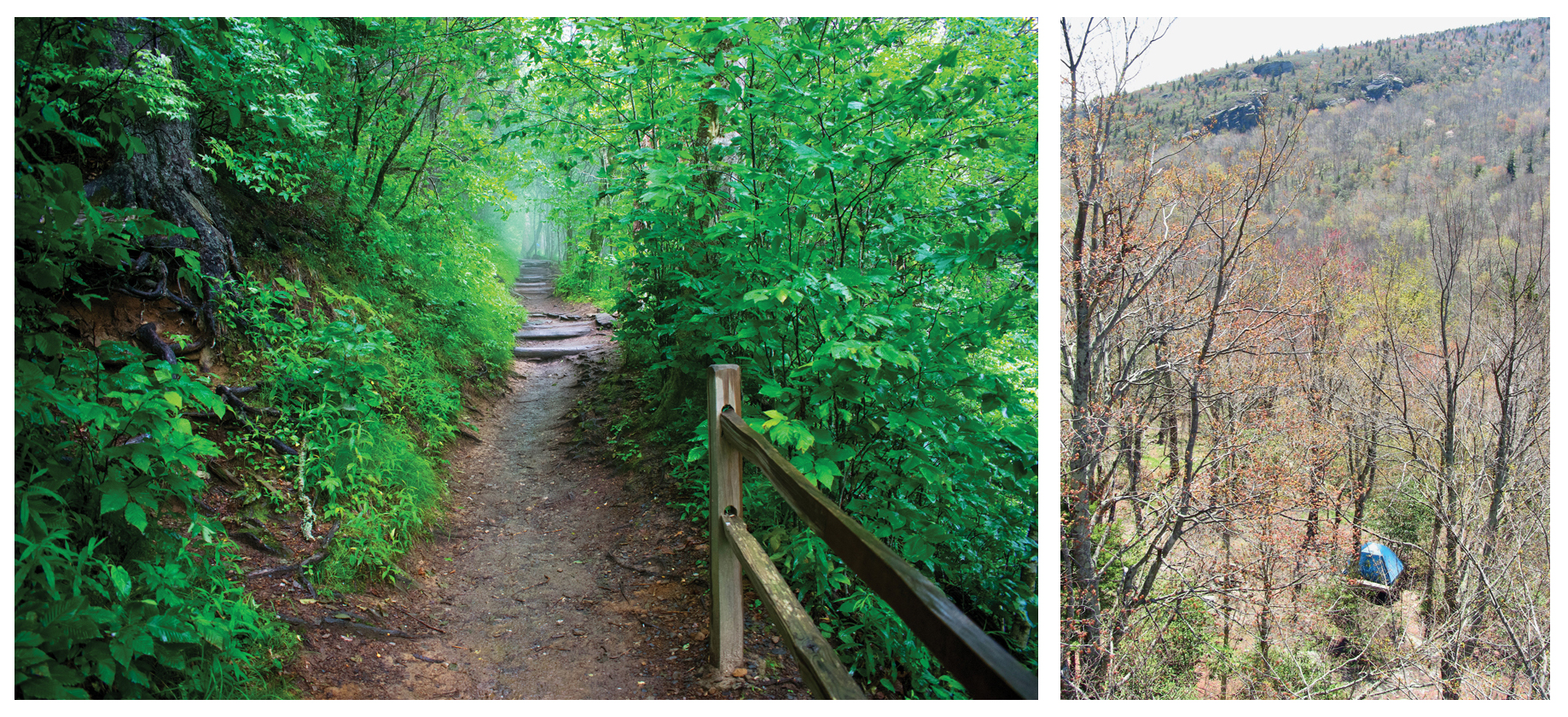
(Left) Great Smoky Mountains National Park; (Right) Grandfather Mountain.
Stone Mountain State Park
The 14,000-acre park’s four designated backcountry campsites are secluded along Widow’s Creek near water (always a treat). The Mountains-to-Sea Trail passes near the sites on its climb up to the Blue Ridge Parkway. ncparks.gov/state-parks/stone-mountain-state-park
Linville Gorge Wilderness
This 12,000 acre wild area is likely the most rugged of North Carolina’s federally designated Wilderness Areas. Most trails reopened now with caveats of impact forest hikes. No fires, and permits are required for day and overnight use. fs.usda.gov/recarea/nfsnc